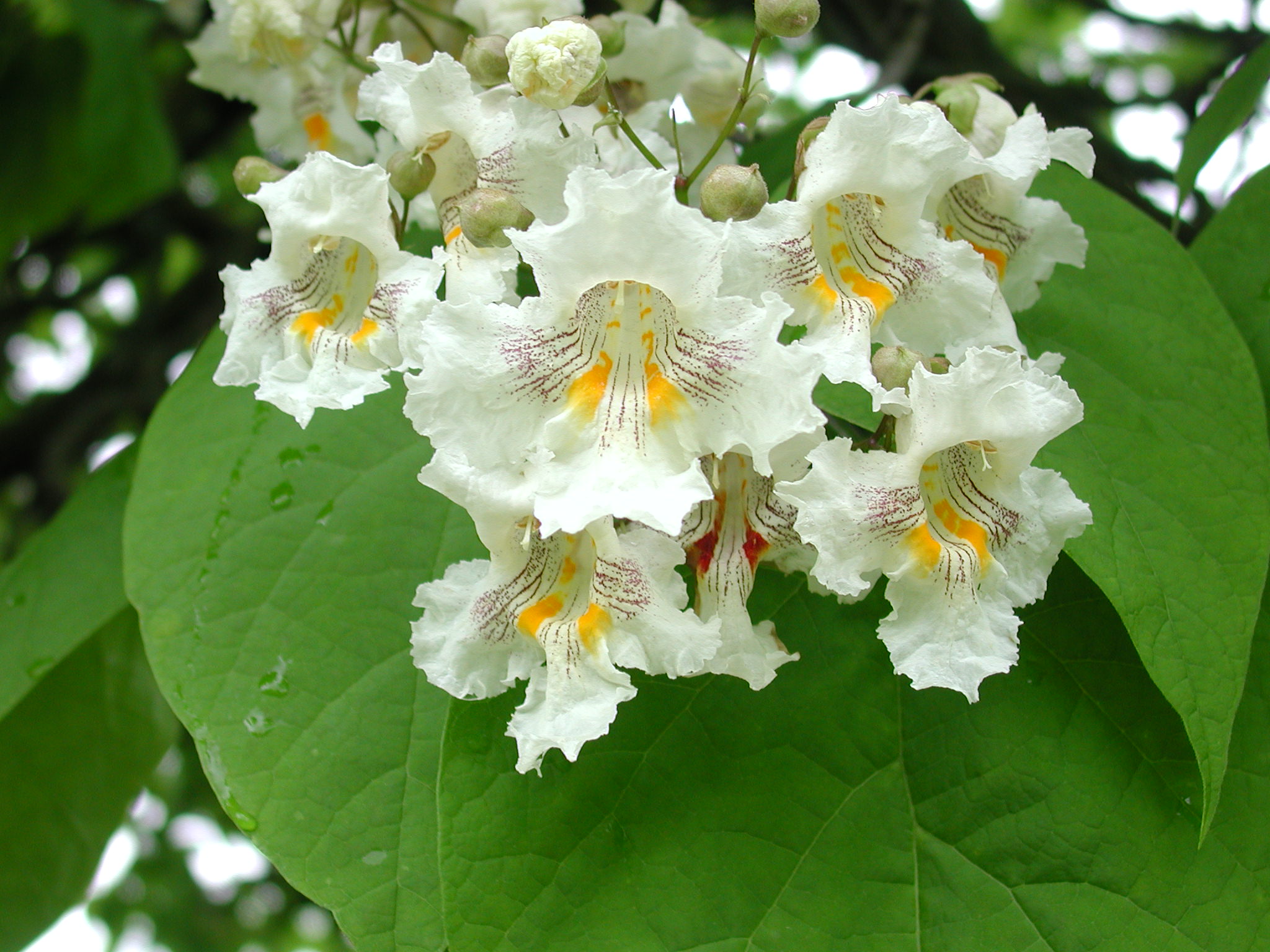
Description
Catalpa, Northern
DECIDUOUS
Catalpa speciosa
Origin:
Northern catalpa is primarily used today as a large ornamental shade tree. It is widely planted in urban areas as a street and lawn tree. Conservation uses include plantings in mined-land reclamation projects and shelterbelts.
Where To Grow
The large, heart-shaped leaves and abundant, showy-white spring flowers give catalpa a tropical appearance. Fortunately, the tree is much hardier than it appears and can even be grown in the far western reaches of the state. Catalpas prefer moist, deep, well-drained soil, but adapts to dry or wet soils. It also prefers an open sunny space to partial shade.
Size at Maturity
| Tree Height | Tree Spread |
| 40-70′ | 30-50′ |
Reviews
There are no reviews yet.